

CV
Dowload my curriculum.
Learn moreASTROPHYSICIST, POSTDOCTORAL RESEARCHER AT INAF-OAS BOLOGNA
I am currently a Postdoctoral Researcher at INAF – Osservatorio di Astrofisica e Scienza dello Spazio (OAS) in Bologna, Italy, working within the AGN-sCAN team. My current research focuses on applying novel Very Long Baseline Interferometry (VLBI) techniques to uncover active galactic nucleus (AGN) emission hidden within highly star-forming galactic nuclei.
This work aims to identify and characterize some of the faintest AGN in the COSMOS field. To achieve this, I integrate data across multiple wavelengths, including JWST NIRSpec and MIRI spectroscopy/imaging, as well as ground-based optical spectroscopy from instruments such as KMOS and MUSE on the VLT.
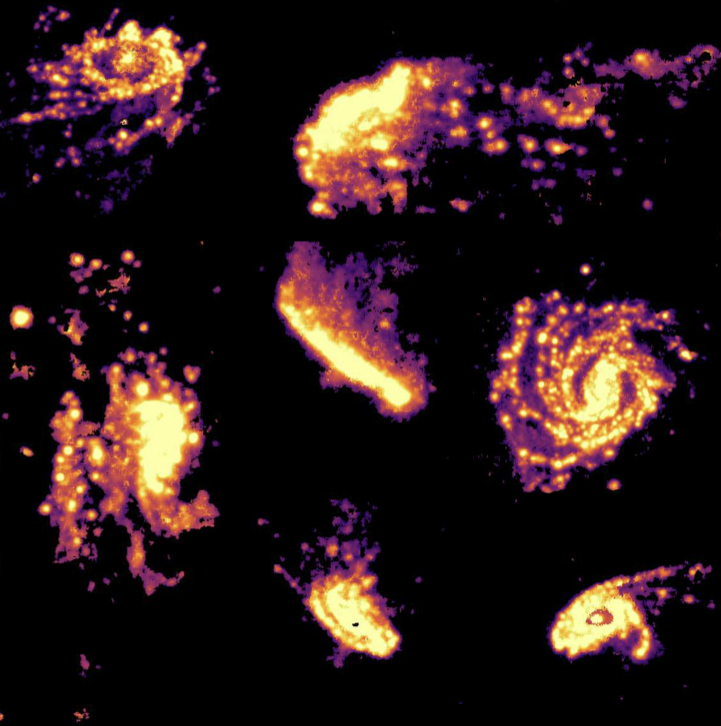
Ram-pressure stripping in clusters is known to dramatically alter galaxy evolution. But could this cosmic "wind tunnel" also trigger AGN? By combining MUSE observations from the GASP program with a deep dive into the literature, this study offers the most robust look yet at AGN activity in stripped galaxies. Analyzing 115 galaxies, we found that 27% host an AGN — a figure that jumps to 51% among higher-mass systems. When compared to non-stripped galaxies from the MaNGA survey, AGN incidence is significantly higher in stripped galaxies, with a confidence level above 99.95%. Strong new evidence for a connection between ram-pressure stripping and galactic nuclear activity arise.
Learn more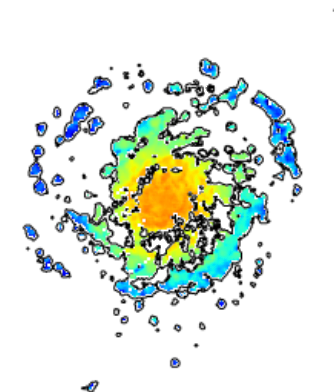
New evidence suggests AGN may be responsible for metal-rich of galactic nuclei — with nearly 2× higher enrichment than the outer disk. But does ram-pressure stripping play a role? Our latest study compares AGN in clusters and the field to untangle the role of the environment.
Learn more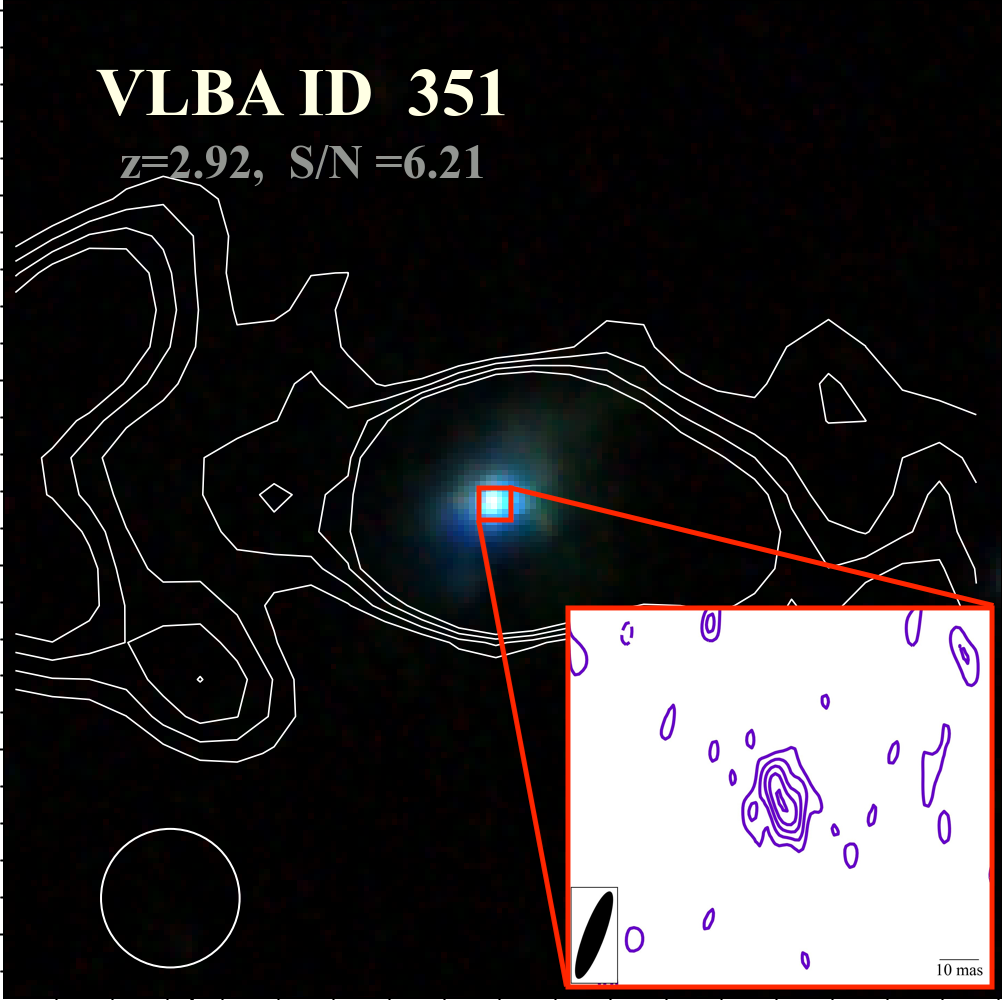
Our high-resolution AGN-sCAN survey reveals faint AGN in galaxies previously considered "radio-quiet." Though ~30% of the detected radio flux is AGN-driven, the overall IR–radio correlation remains stable. In this work, we found out through advanced VLBA techniques that the galaxy mass dependence of this relation is likely not caused by residual AGN contamination.
Learn more
Dowload my curriculum.
Learn more
Peluso et al. (2022)
Learn more
Peluso et al. (2023)
Learn more
Peluso et al. (2025)
Learn more